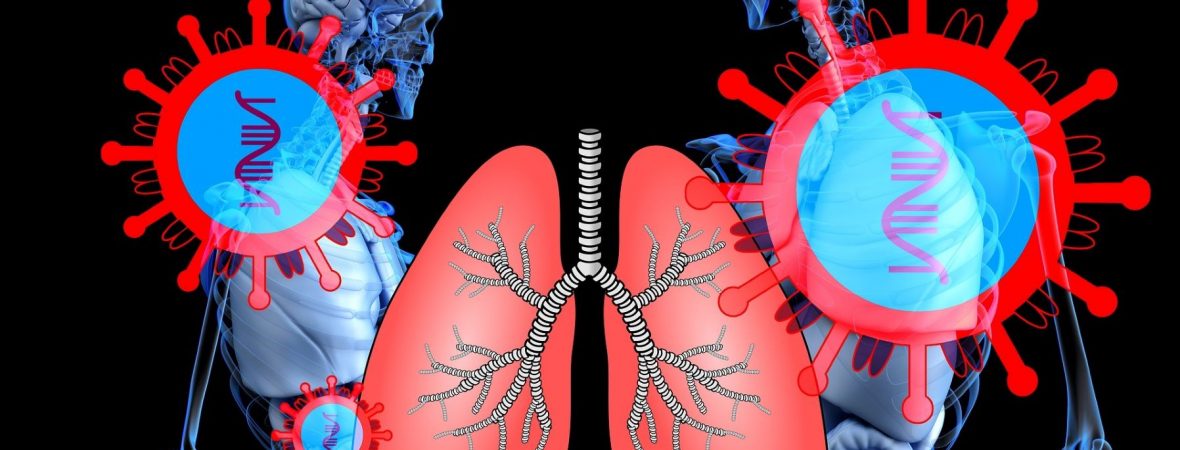
In a multi-group collaborative involving the National Emerging Infectious Disease Laboratories (NEIDL), the Center for Regenerative Medicine (CReM), and the Center for Network Systems Biology (CNSB), scientists have reported the first map of the molecular responses of human lung cells to infection by SARS-CoV-2. By combining bioengineered human alveolar cells with sophisticated, highly precise mass spectrometry technology, Boston University School of Medicine (BUSM) researchers have identified host proteins and pathways in lung cells whose levels change upon infection by the SARS-CoV-2, providing insights into disease pathology and new therapeutic targets to block COVID-19. They found a crucial type of protein modification called “phosphorylation” becomes aberrant in these infected lung cells. Phosphorylation of proteins play a major role in regulating protein function inside the cells of an organism and both protein abundance and protein phosphorylation are typically highly controlled processes in the case of normal/healthy cells. However, they discovered that SARS-CoV-2 throws the...
🔒 Premium Content - For Free
Unlock this content by becoming a Global Health Press subscriber. Join for exclusive articles, expert research, and valuable insights!