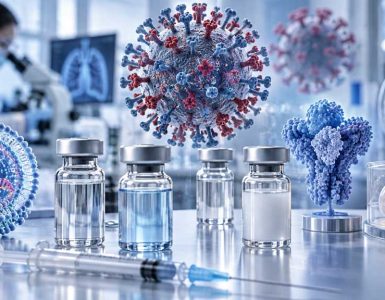

Researchers have developed a new silk-based stabiliser that kept some vaccines and antibiotics stable up to temperatures of 60 degrees Celsius. The breakthrough could free vaccines and antibiotics from the necessity of refrigeration (cold chain), potentially saving billions of dollars every year and increasing accessibility to third world populations. Vaccines and antibiotics often need to be refrigerated to prevent alteration of their chemical structures, which can lower the potency of drugs and medicines, the journal Proceedings of the National Academy of Sciences reports. The need for a cold chain has been a difficulty for health care providers, aid organisations, scientists and pharmaceutical companies for decades, especially in settings where electricity is limited. Failures in the chain result in the loss of nearly half of all global vaccines, according to researchers. The research was led by David Kaplan and Jeney Zhang, doctoral candidates at Tufts University School of Engineering in Medford, Massachusetts, according to a Tufts...
🔒 Premium Content - For Free
Unlock this content by becoming a Global Health Press subscriber. Join for exclusive articles, expert research, and valuable insights!