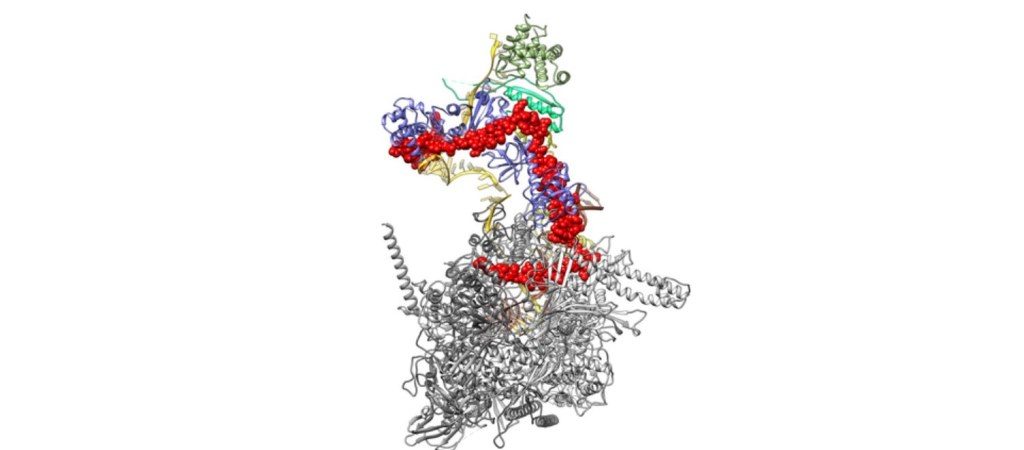
Scientists decipher protein structure after more than fifty years of research Viruses depend on host cells for replication, but how does a virus induce its host to transcribe its own genetic information alongside that of the virus, thus producing daughter viruses? For decades, researchers have been studying a type of bacteriophage known as ‘lambda’ to try and find an answer to this question. Using high-resolution cryo-electron microscopy, a research group from Charité – Universitätsmedizin Berlin has now successfully deciphered this process. Their findings have been published in Molecular Cell. No host, no viruses. While it is true that viruses are capable of spreading by surviving outside a host, they need a host for replication. Viruses lack the complex apparatus necessary for the transcription of genetic information and its subsequent translation into new virus components. This is why all viruses need access to a host cell’s molecular infrastructure. For decades, researchers have been...
🔒 Premium Content - For Free
Unlock this content by becoming a Global Health Press subscriber. Join for exclusive articles, expert research, and valuable insights!