
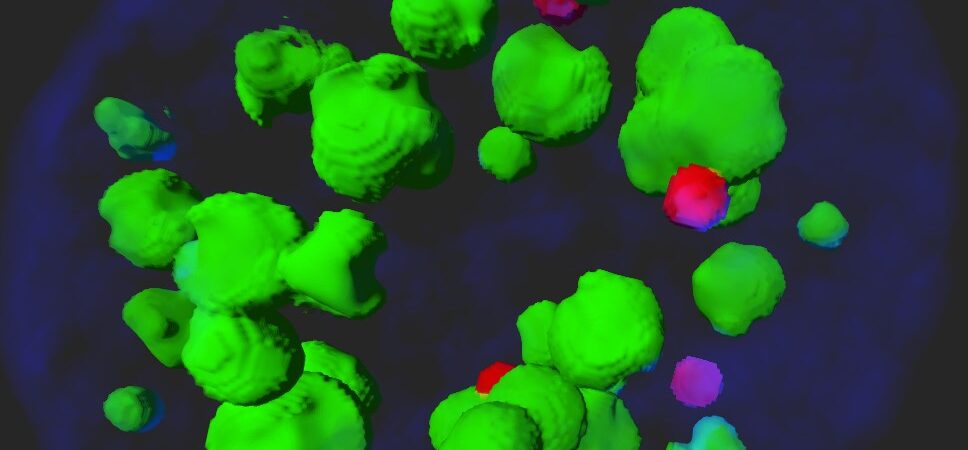
A collaborative study from UT Southwestern scientists has identified a new function for a protein called TAO2 that appears to be key to inhibiting replication of the influenza virus, which sickens millions of individuals worldwide each year and kills hundreds of thousands. The findings were published in PNAS. “These results uncover new strategies for interfering with influenza virus replication, providing a potential avenue for the development of new antivirals against influenza,” said Beatriz Fontoura, Ph.D., Professor of Cell Biology at UT Southwestern, whose lab studies the interplay between RNA viruses, such as influenza A virus, with their hosts. The study was led by Dr. Fontoura, together with first author and postdoctoral fellow Shengyan Gao, Ph.D., and Melanie H. Cobb, Ph.D., Professor of Pharmacology. To replicate, influenza virus takes over parts of the host cell nucleus known as nuclear speckles, which then provide the virus an environment to express its genes. Dr. Fontoura...
🔒 Premium Content - For Free
Unlock this content by becoming a Global Health Press subscriber. Join for exclusive articles, expert research, and valuable insights!