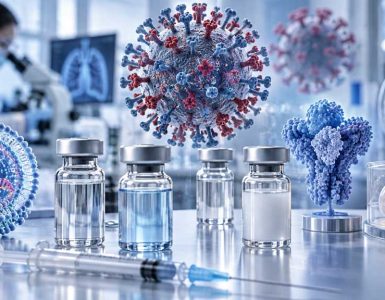

Critical insights into why airborne viruses lose their infectivity have been uncovered by scientists at the University of Bristol. The findings, published in the Journal of the Royal Society Interface, reveal how cleaner air kills the virus significantly quicker and why opening a window may be more important than originally thought. The research could shape future mitigation strategies for new viruses. In the first study to measure differences in airborne stability of different variants of SARS-CoV-2 inhalable particles, researchers from Bristol’s School of Chemistry show that the virus has become less capable of surviving in the air as it has evolved from the original strain through to the ‘Delta’ variant. Dr Allen Haddrell, the study’s lead author and Senior Research Associate in Bristol’s School of Chemistry, explained: “Aerosol particles, exhaled when infected individuals breathe, speak or cough, can transmit viruses – but how and why viruses lose infectivity once they are circulating around...
🔒 Premium Content - For Free
Unlock this content by becoming a Global Health Press subscriber. Join for exclusive articles, expert research, and valuable insights!