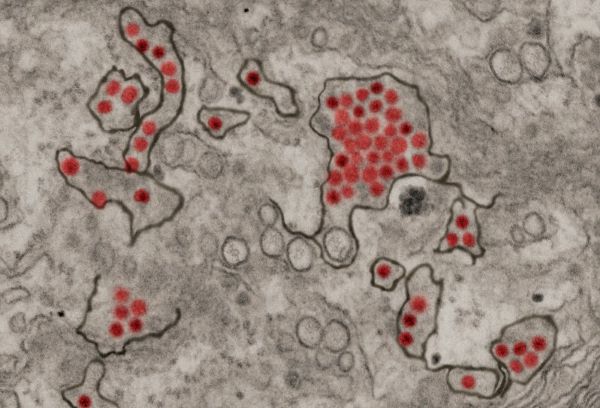
Zika’s crucial enzyme performs multiple tasks, but a wrench in the system could bring it to a screeching halt Viruses have limited genetic material—and few proteins—so all the pieces must work extra hard. Zika is a great example; the virus only produces 10 proteins. Now, in a study published in the journal PLOS Pathogens, researchers at Sanford Burnham Prebys have shown how the virus does so much with so little and may have identified a therapeutic vulnerability. In the study, the research team showed that Zika’s enzyme—NS2B-NS3—is a multipurpose tool with two essential functions: breaking up proteins (a protease) and dividing its own double-stranded RNA into single strands (a helicase). “We found that Zika’s enzyme complex changes function based on how it’s shaped,” says Alexey Terskikh, Ph.D., associate professor at Sanford Burnham Prebys and senior author of the paper. “When in the closed conformation, it acts as a classic protease. But then it...
🔒 Premium Content - For Free
Unlock this content by becoming a Global Health Press subscriber. Join for exclusive articles, expert research, and valuable insights!