
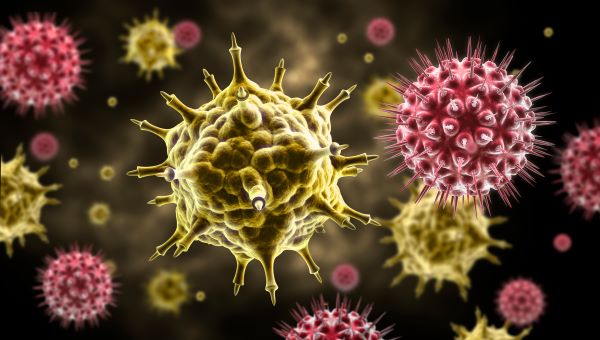
A team from Stanford University utilized cutting-edge microscopy to delve into the intricacies of SARS-CoV-2 replication within cells, potentially revolutionizing drug development. They captured high-resolution images of the virus’s RNA and replication structures forming around the cell’s nucleus. The study explained the molecular activity of the virus inside host cells in detail. Viruses take over cells, turning them into virus factories with particular replication sites. Here, the viral RNA duplicates until enough is made to infect new cells. Stanford scientists focused on seeing this replication step in sharp detail. They labeled the viral RNA and proteins with fluorescent colors. To avoid fuzzy images, they used a chemical to randomly make the fluorescence blink on and off. This helped them pinpoint the exact locations of the molecules. The researchers used lasers, robust microscopes, and a fast camera to capture detailed images of blinking molecules. Combining these images created clear photos showing the cells‘ viral...
🔒 Premium Content - For Free
Unlock this content by becoming a Global Health Press subscriber. Join for exclusive articles, expert research, and valuable insights!