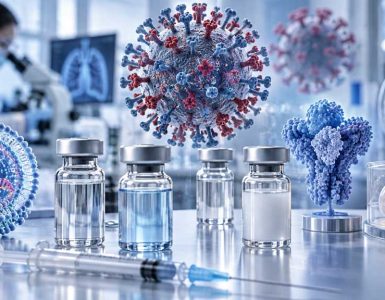

Shipping vaccines in an unbroken temperature-controlled supply chain (a “cold chain”) all the way to recipients is a major logistical and financial challenge in remote areas and developing countries. According to Doctors Without Borders, the need to keep vaccines within a temperature range of 2-8°C is one of the main factors behind low immunization-coverage rates. Researchers at EPFL’s Supramolecular Nanomaterials and Interfaces Laboratory (SUNMIL), in collaboration with scientists in Milan, Turin, Leiden, and Oregon, have come up with three simple and inexpensive vaccine additives to get around this obstacle. Using minute quantities of nanoparticles, or FDA-approved polymer (polyethylene glycol), or higher amounts of sucrose, they were able to stabilize vaccines at room temperature for several weeks or, in some cases, months. Their approach, which was successfully tested on a vaccine for rodents, is published in Nature Communications. Nanoparticles, polymers and sugar The study addressed viral-vector vaccines, the most common type of vaccine, which...
🔒 Premium Content - For Free
Unlock this content by becoming a Global Health Press subscriber. Join for exclusive articles, expert research, and valuable insights!