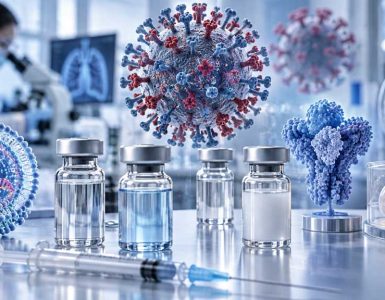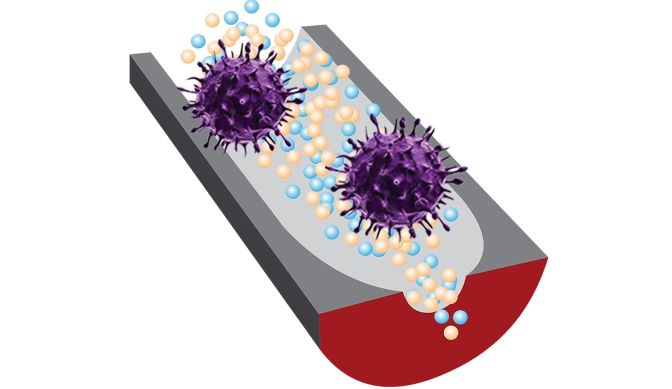
A new sensor can detect not only whether a virus is present, but whether it’s infectious – an important distinction for containing viral spread. Researchers at the University of Illinois Urbana-Champaign and collaborators developed the sensor, which integrates specially designed DNA fragments and nanopore sensing, to target and detect infectious viruses in minutes without the need to pre-treat samples. They demonstrated the sensor’s power with two key viruses that cause infections worldwide: the human adenovirus and the virus that causes COVID-19. Yi Lu, a professor emeritus of chemistry, and Benito Marinas, a professor of civil and environmental engineering, co-led the work with University of Illinois Chicago professor Lijun Rong; professor Omar Azzaroni, of the National University of La Plata in Argentina; and María Eugenia Toimil-Molares, of the GSI Helmholtz Centre for Heavy Ion Research in Germany. They reported their findings in the journal Science Advances. “The infectivity status is very important information that...
🔒 Premium Content - For Free
Unlock this content by becoming a Global Health Press subscriber. Join for exclusive articles, expert research, and valuable insights!