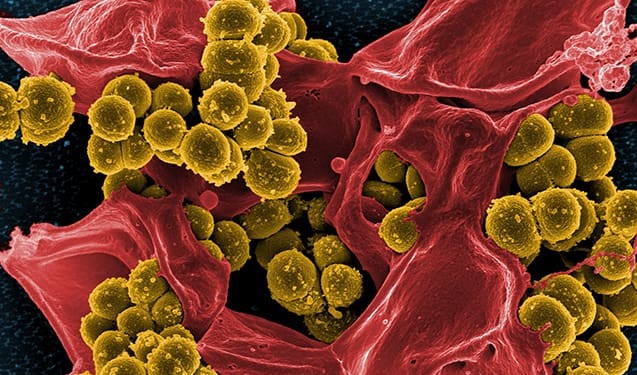
The sometimes-pathogenic bacteria has a long and intimate relationship with people, one that helps it fend off our immune response For the most part, the bacterium Staphylococcus aureus is common and harmless, posing no threat to humans with whom they coexist. Occasionally, though, it can become an opportunistic pathogen, causing skin and bloodstream infections or food poisoning. For more than a century, scientists have searched for an effective vaccine, including at least 15 successful preclinical studies using animal models in the past 30 years. In all of the subsequent human trials, however, these vaccine candidates failed. “It’s a longstanding and one of the most enigmatic issues of the staphylococcal field,” said George Liu, MD, PhD, professor of pediatrics at University of California San Diego School of Medicine and chief of the Division of Infectious Diseases at Rady Children’s Hospital-San Diego. “None of these human trials have worked and scientists have struggled to find...
🔒 Premium Content - For Free
Unlock this content by becoming a Global Health Press subscriber. Join for exclusive articles, expert research, and valuable insights!