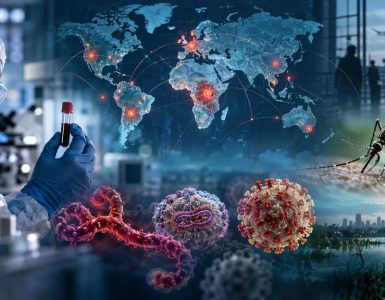

The 2014 Ebola outbreak in West Africa has dramatically raised awareness of the global burden of infectious disease and raised questions about the preparedness of public health systems. Although non-communicable diseases are the leading cause of morbidity and mortality in most developed nations, infectious disease remains a major public health concern in the United States and around the world. Defining and examining the global distribution of infectious disease, in both time and location, is a major research priority. These “spatio-temporal patterns” allow researchers to examine how and why infectious disease does or does not spread. Three terms are used in epidemiology — the study of the spread, causes and consequences of disease — to describe disease distribution: Epidemic: A widespread increase in the observed rates of disease in a given population. Diseases such as mumps, measles and cholera can become epidemics, depending on a range of factors. Endemic: A consistently heightened rate of disease...
🔒 Premium Content - For Free
Unlock this content by becoming a Global Health Press subscriber. Join for exclusive articles, expert research, and valuable insights!