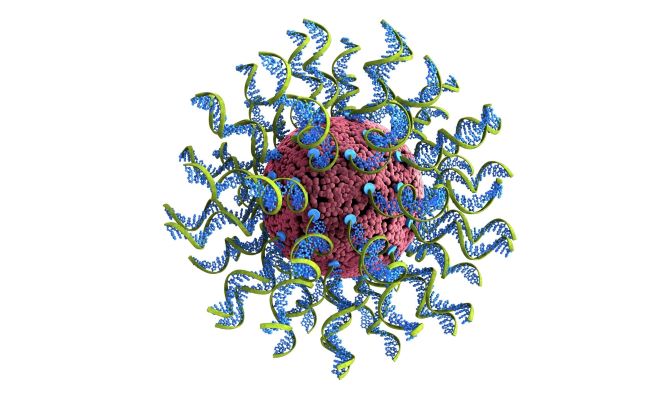
Just one dose of a new nanoparticle-based COVID-19 vaccine was enough to produce an immune response in animals on track with vaccines currently in clinical use. And with minor changes, Northwestern University researchers hope the same vaccine platform could target other infectious diseases. In a new study, 100% of mice who received the protein-based immunization survived when challenged with lethal doses of the SARS-CoV-2 virus, which causes COVID-19. None of the mice experienced lung damage due to SARS-CoV-2 exposure. All mice who did not receive this nanoparticle vaccine died in a 14-day trial. The results, published this week in the Proceedings of the National Academy of Sciences, outline the structure-function relationships between the first spherical nucleic acid (SNA) vaccine developed to protect against viral infections. “What makes this vaccine different than other vaccines is the approach we take to design them,” said Dr. Michelle Teplensky, co-first author of the paper. Called SNAs, the nanoparticles...
🔒 Premium Content - For Free
Unlock this content by becoming a Global Health Press subscriber. Join for exclusive articles, expert research, and valuable insights!