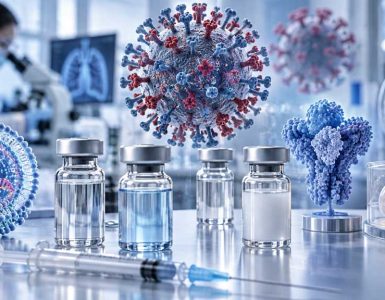

In new medical research, scientists at Washington’s National Institutes of Health (NIH) have discovered a mechanism that helps HIV patients evade antibodies and stabilise key proteins, in a finding that could pave way for more effective vaccines against the deadly virus. The stabilised HIV proteins could help cocoon sites where some of the most powerful HIV neutralising antibodies bind, the scientists said. Numerous spikes jut out of the surface of HIV, each containing a set of three identical, bulb-shaped proteins called gp120 that can be closed together or spread apart like the petals of a flower. Some of the most important sites targeted by HIV neutralising antibodies are hidden when the three gp120s, or the trimer, are closed, and the gp120 trimer remains closed until the virus binds to a cell, they said. The researchers discovered that certain amino acids located on the gp120 protein undergo a process that stabilises the trimer in its...
🔒 Premium Content - For Free
Unlock this content by becoming a Global Health Press subscriber. Join for exclusive articles, expert research, and valuable insights!