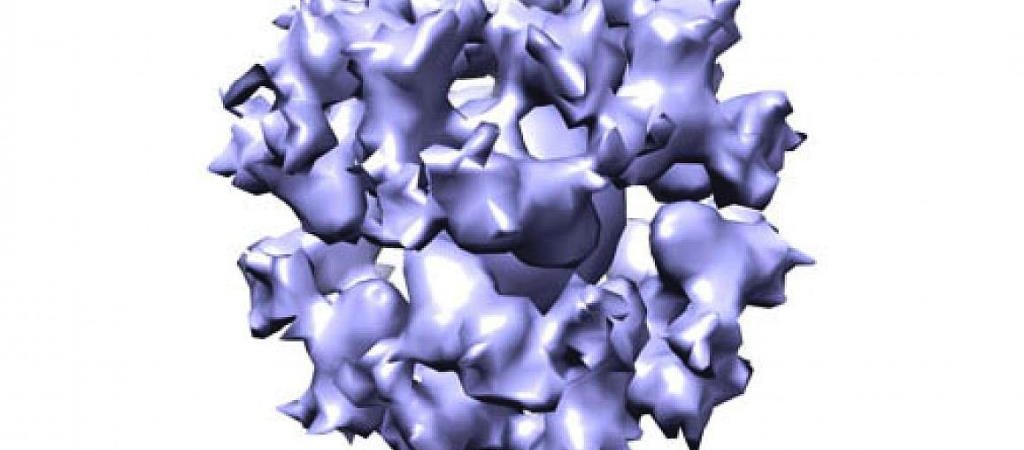
A research team led by scientists from NIH’s National Institute of Allergy and Infectious Diseases (NIAID) has determined how several antibodies induced by Epstein-Barr virus (EBV), a herpesvirus that causes infectious mononucleosis and is associated with certain cancers, block infection of cells grown in the laboratory. They then used this information to develop novel vaccine candidates that, in animals, elicited potent anti-EBV antibody responses that blocked infection of cell types involved in EBV-associated cancers. Currently, there is no licensed vaccine for EBV. The virus is associated with certain cancers (nasopharyngeal and gastric) of epithelial cells, which form the lining of the body’s surfaces, as well as Burkitt and Hodgkin lymphomas, which are cancers of the immune system’s B cells. Worldwide, about 200,000 cases of EBV-associated cancers occur annually, resulting in 140,000 deaths. Jeffrey I. Cohen, M.D., and Wei Bu, Ph.D., both of NIAID, led the investigation. Prior efforts to develop an EBV...
🔒 Premium Content - For Free
Unlock this content by becoming a Global Health Press subscriber. Join for exclusive articles, expert research, and valuable insights!