
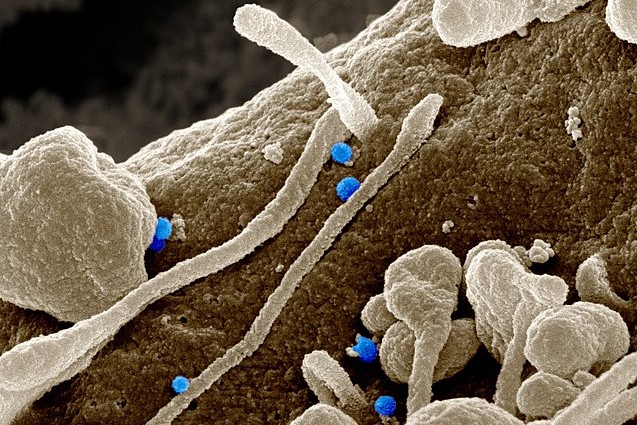
U.S. Army Medical Research Institute of Infectious Diseases (USAMRIID) scientists, working as part of an international consortium, have developed and tested an antibody-based therapy to treat Crimean-Congo hemorrhagic fever virus (CCHFV), which is carried by ticks and kills up to 60 percent of those infected. New results published online in the journal Cell characterized the human immune response to natural CCHFV infection. The researchers were able to identify several potent neutralizing antibodies that target the viral glycoprotein–a component of the virus that plays a key role in disease development. Several of these antibodies, administered individually or in combination, protected mice from CCHFV when given prior to virus exposure. To treat mice that had already been infected, the team created “bispecific” antibodies that combined potency with the ability to bind to two separate sites on the CCHFV glycoprotein. One of these bispecific antibodies, called DVD-121-801, overcame CCHFV infection in mice with just a...
🔒 Premium Content - For Free
Unlock this content by becoming a Global Health Press subscriber. Join for exclusive articles, expert research, and valuable insights!