
Overview
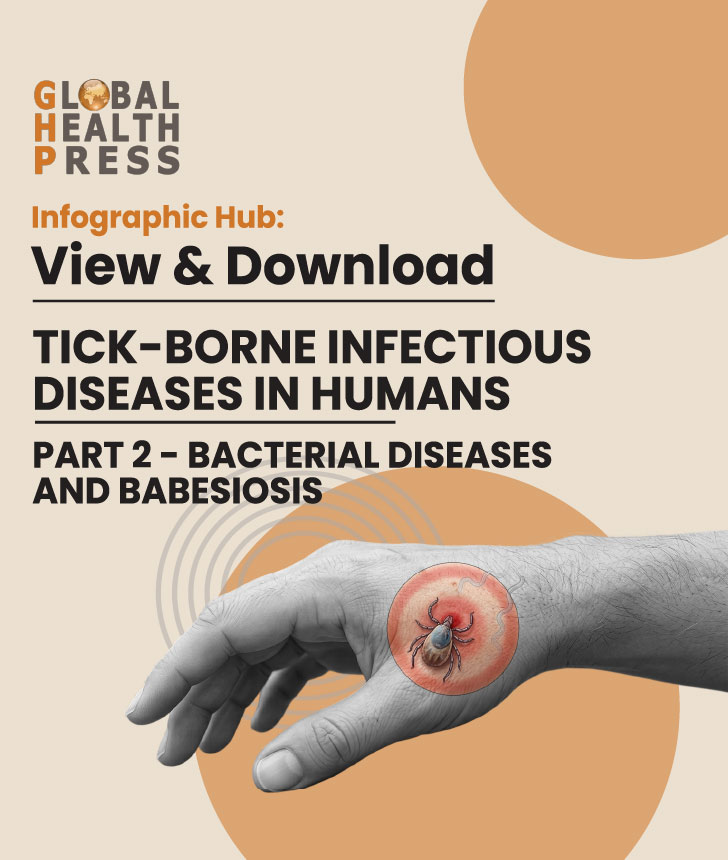
- This infographic provides an overview of tick-borne infectious diseases in humans, focusing on bacterial infections and babesiosis.
- It explains the relationship between causative pathogens, clinical features, tick vectors, and geographic distribution.
- These diseases are a global public health concern, affecting regions across North America, Europe, Asia, Africa, and Australia.
- Major diseases include Lyme disease, spotted fever group rickettsioses, anaplasmosis, ehrlichiosis, and babesiosis.
- Key pathogens include Borrelia, Rickettsia, Anaplasma, Ehrlichia, and Babesia, transmitted through different tick species.
- Common tick vectors include Ixodes, Amblyomma, Dermacentor, and Rhipicephalus.
- Clinically, these diseases often present with fever, rash, and systemic symptoms, but some may lead to severe complications.
- In some cases, infections can result in neurological involvement or multi-organ disease, especially in immunocompromised individuals.
- Overall, the infographic emphasizes the diversity of pathogens, their wide geographic spread, and the importance of early recognition and awareness.
- It serves as an educational tool to support public health awareness, clinical understanding, and global surveillance efforts.
By Global Health Press