
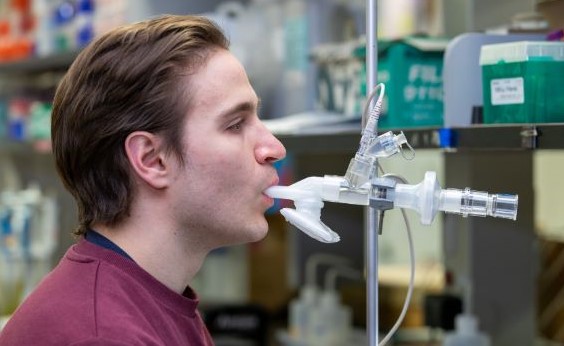
Inhaled aerosol vaccines provide far better protection and stronger immunity than nasal sprays, McMaster scientists who compared respiratory vaccine-delivery systems have confirmed. While nasal sprays reach primarily the nose and throat, inhaled aerosols bypass the nasal passage and deliver vaccine droplets deep in the airway, where they can induce a broad protective immune response, the researchers report. For the study, published online in the journal Frontiers in Immunology, the researchers used a tuberculosis vaccine to compare delivery methods by measuring the distribution of droplets, immune responses and potency in animals. When the vaccine was delivered directly into the lungs it stimulated stronger immune responses, providing much better protection from TB. “Infections in the upper respiratory tract tend to be non-severe. In the context of infections caused by viruses like influenza or SARS-CoV-2, it tends to be when the virus gets deep into the lung that it makes you really sick,” explains Matthew Miller,...
🔒 Premium Content - For Free
Unlock this content by becoming a Global Health Press subscriber. Join for exclusive articles, expert research, and valuable insights!