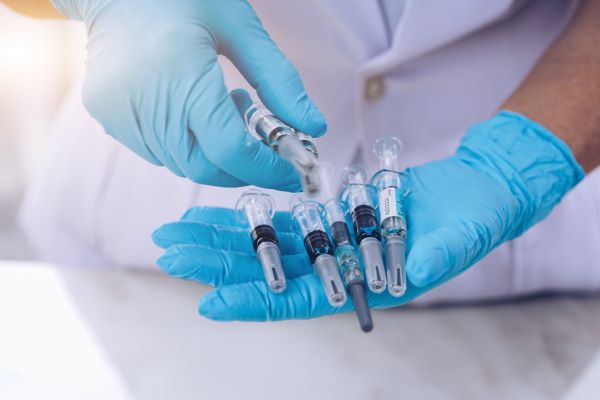
Johns Hopkins Medicine research finds booster doses of bivalent vaccines given every three to six months helps maintain a person’s ability to neutralize multiple SARS-CoV-2 strains, including XBB.1.5 People who have received solid organ transplants and take immunosuppressant medications to prevent rejection are among those most susceptible to the damaging effects of COVID-19, including breakthrough infections, severe illness, hospitalization and death. Particularly dangerous for them has been the XBB.1.5 subvariant of the omicron strain of SARS-CoV-2, the virus that causes COVID-19. That’s because XBB.1.5 possesses a genetic mutation that enables it to more effectively bind with cells it attacks, and therefore, make it more transmissible than earlier SARS-CoV-2 strains. In a study published in the journal Clinical Infectious Diseases, a Johns Hopkins Medicine research team reports that for XBB.1.5, there is good news for solid organ transplant recipients (SOTRs) and other immunocompromised people who receive regular booster doses of a messenger RNA...
🔒 Premium Content - For Free
Unlock this content by becoming a Global Health Press subscriber. Join for exclusive articles, expert research, and valuable insights!