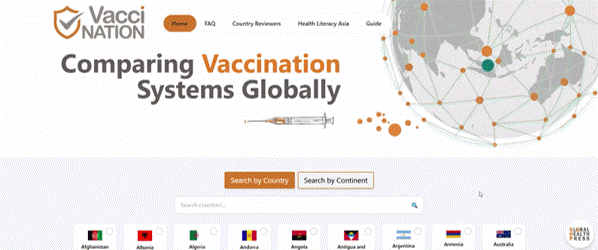
When vaccination is discussed, the focus is usually on vaccines, coverage rates, disease outbreaks, or vaccine hesitancy. Yet one of the most important drivers of vaccination success often remains invisible: the vaccination system itself. Vaccines may be similar across countries, but the systems that regulate, recommend, distribute, monitor, and evaluate them can be dramatically different. Those differences often determine whether vaccination programs succeed, struggle, or fail. Two countries may report similar vaccination coverage while relying on entirely different approaches. One may operate through a highly centralized public-health system, while another distributes responsibilities across regional and local authorities. Governance structures, funding models, healthcare infrastructure, communication strategies, and evaluation mechanisms can vary significantly. The outcome may look similar. The underlying system may not. Making the invisible visible Coverage rates tell us what happened. They do not tell us why it happened. Traditional reports and statistics provide valuable information, but they rarely reveal how the different parts of...
🔒 Premium Content - For Free
Unlock this content by becoming a Global Health Press subscriber. Join for exclusive articles, expert research, and valuable insights!