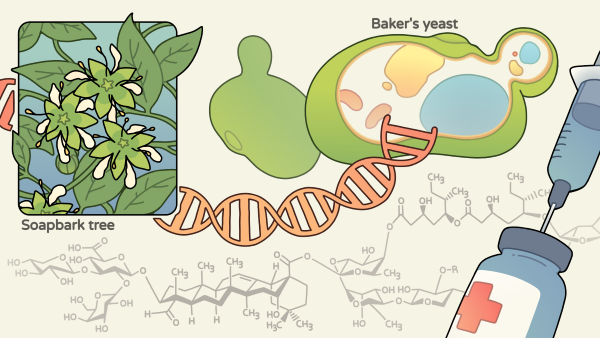
Biosynthesis in yeast produces a cheaper immune-boosting ingredient of many vaccines Vaccines save lives, as proven during the recent pandemic, but one component of most vaccines — including the Novavax COVID-19 vaccine — goes unheralded: a molecule or other compound that primes the immune system to mount a more robust defense against infection. These so-called adjuvants are added in small quantities but have a big protective effect, particularly in infants with immature immune systems and older people with a declining immune response. Yet, one of the strongest adjuvants, an extract of the Chilean soap bark plant, is so difficult to produce that it costs several hundred million dollars per kilogram (2.2 pounds). University of California, Berkeley, and Lawrence Berkeley National Laboratory (Berkeley Lab) scientists have now wielded the power of synthetic biology to produce the active ingredient of soap bark, a molecule called QS-21, in yeast. Producing compounds like this in yeast is not...
🔒 Premium Content - For Free
Unlock this content by becoming a Global Health Press subscriber. Join for exclusive articles, expert research, and valuable insights!