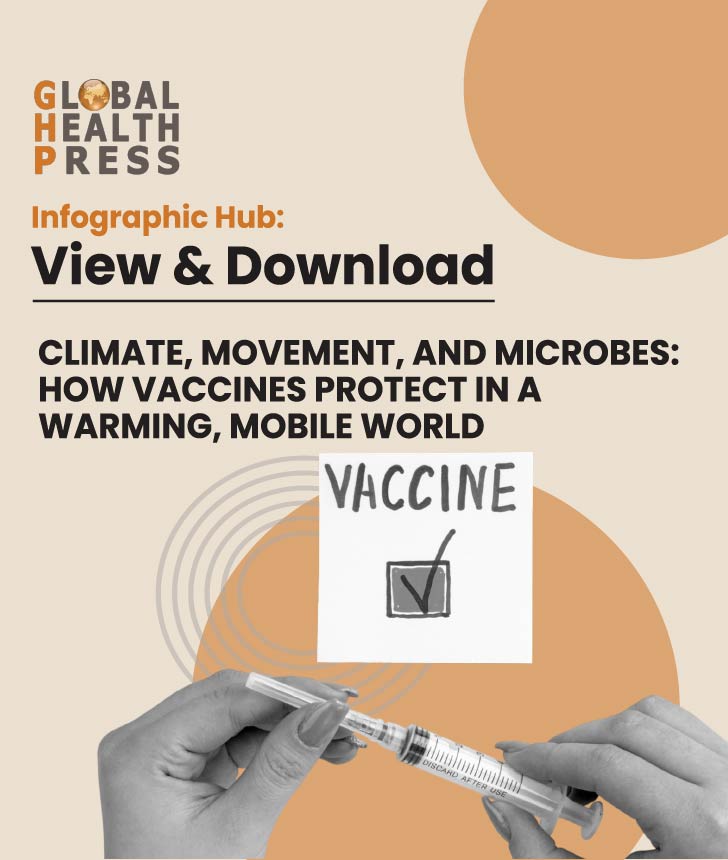
Overview
- Climate change and increased human mobility are altering the risk patterns of vaccine-preventable diseases (VPDs).
- Rising temperatures, changing rainfall, and extreme weather events affect the spread of vectors and pathogens.
- Flooding and damage to water and sanitation systems increase the risk of water- and food-borne diseases such as cholera and typhoid.
- Conflicts, disasters, and economic crises lead to crowding in camps and shelters, increasing the spread of respiratory diseases like measles and influenza.
- Vector-borne diseases (e.g., Japanese encephalitis, yellow fever, and tick-borne encephalitis) may expand into new areas as vector habitats shift.
- Vulnerable populations include people in fragile and conflict-affected settings, informal urban settlements, and coastal and riverine communities.
- Children, pregnant women, older adults, and people with chronic conditions are disproportionately affected.