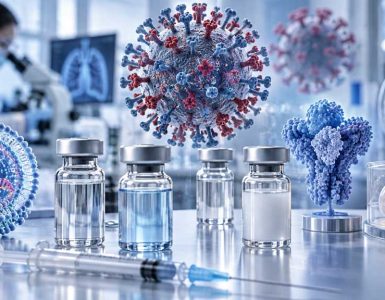

What determines whether a vaccine is going to be effective at protecting us against disease? In a recent paper in the Journal of Immunology, Dr. Jim Kublin and his research team identified an unexpected role of the microbiome in regulating immune responses elicited by nucleic acid vaccines. Whether it’s your annual flu shot or the jabs you got as a kid, vaccines are among the most effective tools for protecting us against disease. Vaccines work by introducing a small part of a pathogen, such as a protein, or a weakened version of a pathogen into our bodies. Our immune system then detects this as foreign and produces antibodies which bind to the pathogen and prevent it from causing an infection. Recently, nucleic acid vaccines, made with DNA or mRNA, have emerged as a new technology that offer significant benefits over traditional protein-adjuvant approaches. These include rapid adaptability to new pathogens, such...
🔒 Premium Content - For Free
Unlock this content by becoming a Global Health Press subscriber. Join for exclusive articles, expert research, and valuable insights!