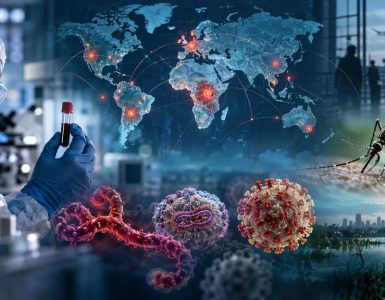

Pandemics are not random catastrophes—they are recurring biological events shaped by predictable patterns of viral evolution, ecological disruption, the number of humans on Earth, and human behavior. Understanding the frequency of past outbreaks, the pathogens now flagged as future threats, and the vast reservoir of undiscovered microbial diversity is essential to building genuine pandemic preparedness. A recurring pattern of outbreaks Influenza pandemics have struck at irregular but recurring intervals for centuries. Historical records suggest 14 influenza pandemics have occurred since 1510, and across the past 130 years, documented pandemics occurred in 1889, 1918, 1957, 1968, 1977, and 2009—averaging roughly one every 36 years, though the interval has varied considerably. The 1918 Spanish flu killed an estimated 17 to 100 million people, while the 1957 Asian flu and 1968 Hong Kong flu each caused an estimated 1 to 4 million deaths, and the 2009 H1N1 pandemic was comparatively mild, with 151,700 to 575,400...
🔒 Premium Content - For Free
Unlock this content by becoming a Global Health Press subscriber. Join for exclusive articles, expert research, and valuable insights!